Wire Ring Making Service: Chainmaille, Filters, Hardware Assembly
Wire rings are the building blocks of chainmaille armour, industrial filters, gaskets, spacers, and thousands of hardware assemblies. Making them in-house sounds simple — until you calculate the real cost per ring. This article breaks down the economics, quality considerations, and turnaround advantages of outsourcing wire ring production.
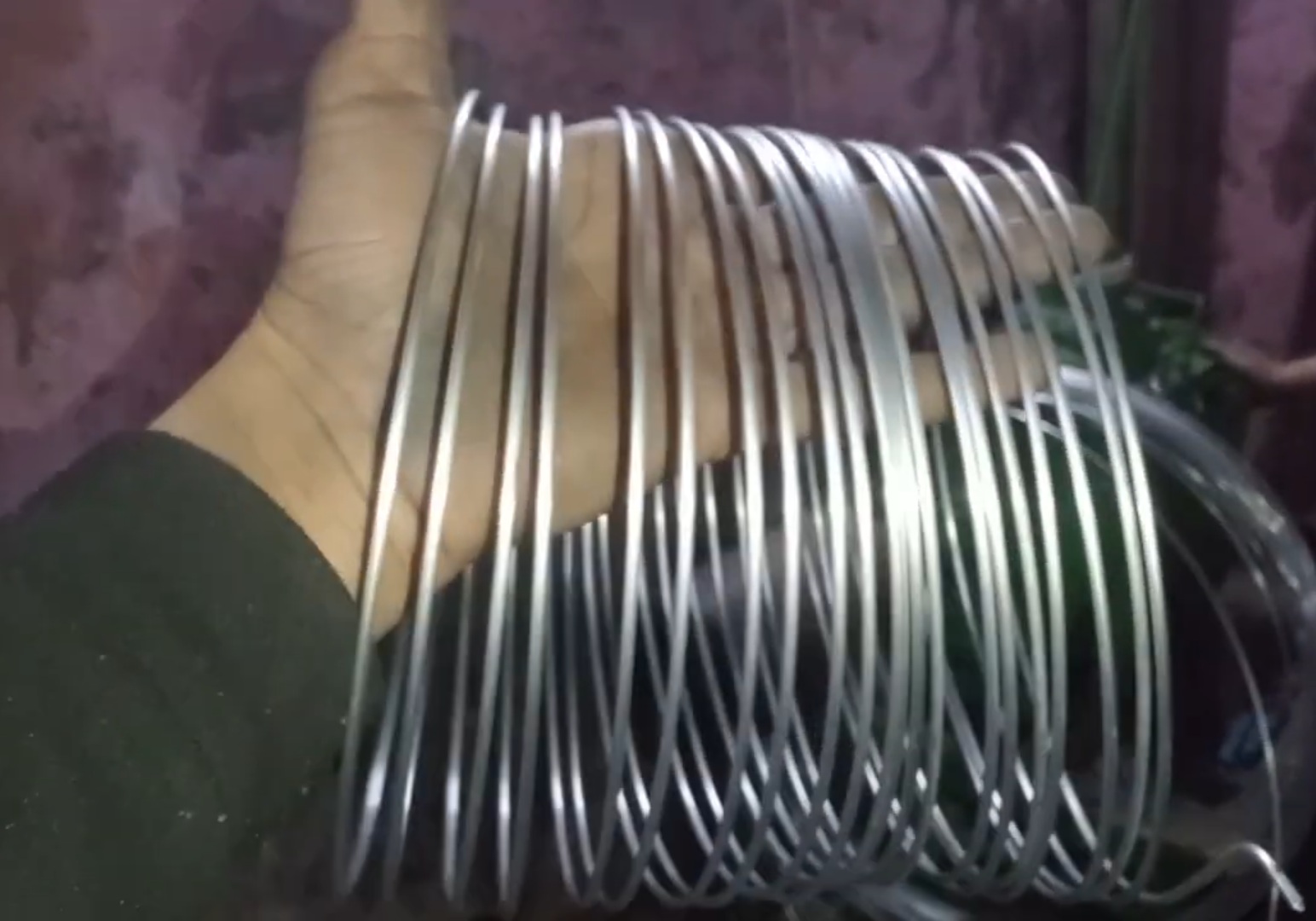
Wire rings for chainmaille, filters, and hardware — outsourced at ₹0.30-1.50 per ring
Chainmaille Rings · Jewellery, Armour, and Decorative Work
Chainmaille — whether for historical reenactment armour, modern jewellery, or decorative mesh — demands rings with consistent inner diameter (ID), clean cut ends, and uniform wire gauge. A single ring that is 0.2 mm off in ID ruins the weave pattern and creates a visible defect.
Professional chainmaille artists and manufacturers outsource ring production for a simple reason: the time spent winding, cutting, and deburring rings is time not spent weaving. A typical chainmaille bracelet requires 200–400 rings. A full hauberk (body armour) can require 20,000–50,000 rings. Cutting 50,000 rings by hand with a jeweller's saw or rotary tool takes weeks.
Materials matter too. Chainmaille rings are made from galvanised steel, stainless steel, aluminium, copper, brass, or titanium. Each material requires different winding tension and cutting technique. A good ring-making service knows these nuances and adjusts accordingly — something your in-house operator may not have the experience to do across different alloys.
Industrial Filter Rings and Gaskets
Filter manufacturers use precision-wound wire rings as support structures for filter media. These rings must hold tight tolerances on both ID and OD because they seat into machined housings. A ring that is too loose by 0.5 mm will let unfiltered fluid bypass the media. Too tight, and it will not seat at all.
Gasket rings follow similar requirements. Whether for flanged pipe connections, pressure vessel seals, or heat exchanger gaskets, the ring must be perfectly round and consistently sized across the entire batch. Hand-made rings simply cannot match the repeatability of machine-wound production.
For these industrial applications, outsourcing to a wire ring specialist means you get every ring checked against your specified tolerance, with a certificate of conformance if required. No rejected batches, no field failures from out-of-spec rings.
Hardware Assembly and General Purpose Rings
Split rings for keychains, retaining rings for assemblies, spacer rings for automotive components, and connector rings for rigging hardware — the list of applications is endless. Most of these are simple components that nobody wants to make one at a time.
When you outsource hardware ring production, you get the benefit of dedicated coiling and cutting machinery that produces rings at 50–100 pieces per minute. The per-ring cost at these speeds is a fraction of what any in-house operation can achieve. Plus, the rings come deburred and ready to use — no secondary finishing operation needed.
Gauge selection matters for hardware rings too. A retaining ring in SWG 14 (2.03 mm) needs different handling than a decorative ring in SWG 22 (0.71 mm). A service that handles the full range from fine to heavy gauge gives you one source for all your ring needs, simplifying procurement.
Cost Comparison · In-House vs Outsourced Ring Making
| Factor | In-House | Outsourced |
|---|---|---|
| Setup Time | 30–60 min per batch | None (already set up) |
| Per-Ring Cost (100 rings) | ₹2–5 | ₹1–3 |
| Per-Ring Cost (10,000 rings) | ₹0.80–1.50 | ₹0.30–0.80 |
| ID Tolerance | ±0.5 mm | ±0.1 mm |
| Deburring | Manual (if done) | Automated tumble deburr |
| Turnaround | 2–5 days (batched with other work) | 2–7 working days |
At scale, outsourced ring making is typically 40–60% cheaper than in-house production when you account for labour and overhead. The savings increase with batch size.
Quality Considerations for Wire Rings
Not all wire rings are created equal. Here is what separates a professional ring-making service from a makeshift shop:
- Consistent inner diameter — achieved through precision mandrels and calibrated winding tension. Every ring from the batch matches within ±0.1 mm
- Clean cut ends — saw-cut or abrasive-cut rings have a small kerf loss. Sheared rings have a flat cut face. Either is fine as long as it is consistent and burr-free
- Deburred edges — sharp edges are dangerous for handling and can damage adjacent rings in chainmaille or gasket assemblies. Professional services tumble or vibratory-deburr every batch
- No work hardening — improper winding speed can work-harden the wire, making it brittle and prone to cracking. Experienced services know the right parameters for each material
Frequently Asked Questions · Wire Ring Making Service
What sizes of wire rings can you make?
We produce rings from 4 mm ID to 150 mm ID, using wire from SWG 24 (0.56 mm) to SWG 4 (5.89 mm). Larger rings require specialised coiling equipment — contact us with your specific ID and gauge requirements for a feasibility check.
What materials are available for wire rings?
We make rings from GI wire, HB wire, stainless steel 304/316, aluminium (various grades), copper, brass, and mild steel. Each material requires specific winding and cutting parameters that we have developed through years of production experience.
What is the minimum order quantity for custom wire rings?
Minimum order depends on gauge and ID. For standard sizes (e.g., 8 mm ID in SWG 18), we can run batches as small as 500 rings. For non-standard sizes or fine gauges, minimums start at 1,000 rings. Larger batches get significantly better per-ring pricing.
Do you offer closed rings or only split rings?
We produce both. Split rings are cut once on the mandrel and can be opened for assembly. Closed (welded) rings require an additional welding and finishing step — we offer this on request for applications that need permanent closed rings, such as certain filter assemblies and load-bearing hardware.
Continue Reading
Get a Quote Within 2 Working Days
We produce precision wire rings in any gauge, any material, any quantity. Split rings or closed rings. Deburred and ready to use.