Class H Enamelled Wire Demand Rising: What It Means for Your Design
Demand for Class H (180°C) enamelled wire has jumped 40% in two years. Motor and transformer designers are shifting away from Class F (155°C) specifications. Here is what is driving the change and how it affects your next design.
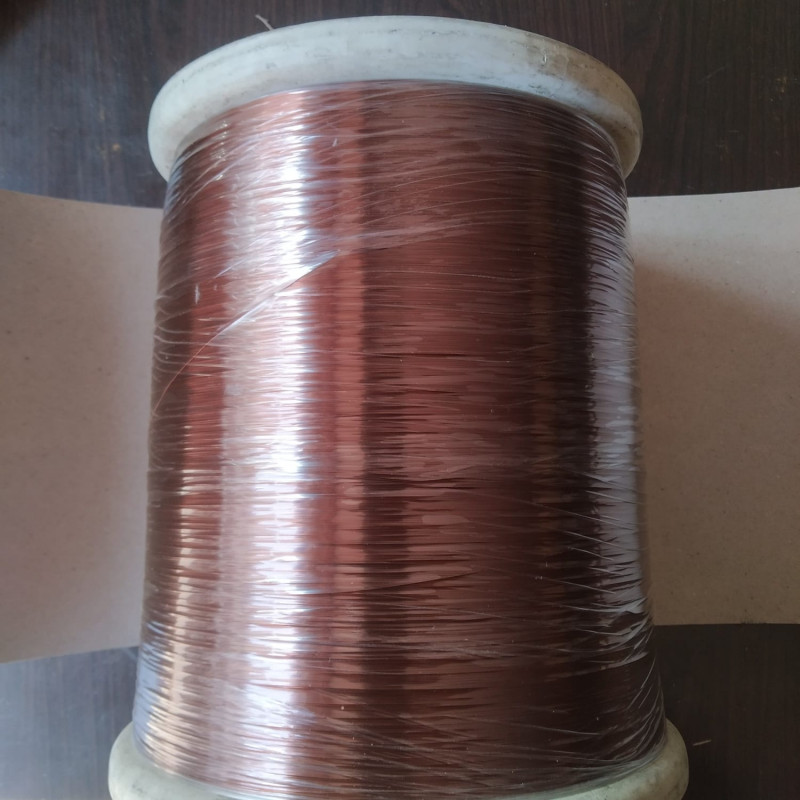
Class H enamelled wire — 40% demand surge driven by VFD motors and energy efficiency norms
What Is Driving the Demand Shift?
I have been in this business long enough to know that material specification trends rarely change overnight. But the shift from Class F to Class H enamelled wire is happening faster than anything I have seen in the winding wire space. Three things are driving it.
1. Equipment Miniaturisation and Higher Power Density
Every motor and transformer designer I talk to is under pressure to pack more power into a smaller frame. A 10 kW motor that used to occupy a 132 frame size is now being squeezed into a 112 frame. Smaller housing means less surface area for heat dissipation. The winding temperature goes up. Class F (155°C) used to be adequate. Now, with the same design running 10–15°C hotter, you need the 180°C continuous rating that Class H provides.
2. Higher Ambient Operating Conditions
Industrial equipment is increasingly operating in harsh environments: enclosed plant floors, direct solar exposure in outdoor installations, proximity to furnaces and ovens. The standard 40°C ambient assumption no longer holds for many installations. When ambient hits 50–55°C, the temperature margin available with Class F insulation disappears. Class H gives you back that safety buffer.
3. Extended Warranty and Life Expectancy Requirements
Buyers are demanding longer equipment life. A pump motor that used to carry a 1-year warranty now often comes with 2–3 years. Transformer specifications increasingly call for 25-year design life. The Arrhenius equation tells us that every 10°C reduction in operating temperature doubles insulation life. Starting with a Class H winding running below its rated temperature gives you dramatically longer life than a Class F winding running at its limit.
The Numbers Behind the Trend
Let me give you some real numbers. Over the last two years, our own Class H enamelled wire volumes have grown from roughly 25% of our total winding wire sales to nearly 45%. That is not just us — industry data from major enamel wire manufacturers shows the same pattern. Class H consumption in India has grown at approximately 18–20% per annum while Class F is essentially flat.
The pricing gap between Class F and Class H has also narrowed. Five years ago, Class H commanded a 25–30% premium. Today, with higher production volumes and improved manufacturing efficiency, the premium is more like 12–18%. That makes the upgrade decision easier for cost-sensitive buyers.
Availability has improved too. When I started in this trade, Class H was a specialty item with 8–12 week lead times. Now most Indian enamel wire manufacturers carry Class H as standard stock. Lead times are typically 2–4 weeks, comparable to Class F.
What This Means for Your Design
For Motor Designers
If you are designing a new motor range, I would strongly recommend starting with Class H as your default specification. The cost premium has come down enough that the thermal headroom is effectively free when you consider the warranty and reliability benefits. For existing Class F designs that are experiencing field failures or warranty claims, a straight swap to Class H enamel on the same winding configuration will typically resolve thermal-related failures without any other design changes.
For Transformer Designers
Distribution transformer specifications are increasingly calling for Class H in the higher ambient regions of India — Rajasthan, Gujarat, Central India. If your transformers are supplying industries with high harmonic loads (VFDs, rectifiers, welding), the additional heating from harmonics makes Class H a wise choice. The incremental cost of Class H over Class F in a typical 100 kVA distribution transformer is less than 2% of the total transformer cost — negligible for the reliability gain.
For Procurement Teams
Here is what I tell procurement people: if your engineering team specifies Class H, do not push back for a cost saving. The premium is small, the availability is good, and the cost of a winding failure in the field (labour, downtime, reputation) dwarfs any saving from downgrading to Class F. Also, be aware that Class H wire requires compatible impregnation varnishes and insulation materials rated for 180°C. Specify the entire insulation system, not just the wire.
Thermal Class Comparison Table
| Property | Class B (130°C) | Class F (155°C) | Class H (180°C) | Class C (200°C) |
|---|---|---|---|---|
| Enamel Type | Polyurethane | Polyesterimide | Polyimide / Polyesterimide | Polyimide |
| Continuous Rating | 130°C | 155°C | 180°C | 200°C |
| Short-Term Overload | 150°C | 175°C | 200°C | 220°C |
| Relative Cost | Baseline | +5–10% | +12–18% | +30–50% |
| Availability (India) | Good | Excellent | Good · improving | Limited · long lead |
| Typical Application | Small transformers, relays | General motors, transformers | High-efficiency motors, VFD-duty, harsh ambient | Specialty, defence, aerospace |
A Word on Supply Constraints
I would be remiss if I did not mention the supply side. While Class H availability has improved significantly, the rapid demand growth is putting pressure on certain gauges. SWG 21–26 (0.81–0.46 mm) in Class H copper wire is particularly tight right now. If you are designing a product that uses those gauges, I recommend placing blanket orders with 6–8 week horizons rather than relying on spot purchases.
For enamelled aluminium in Class H, supply is less constrained because the volume is smaller. But the same trend is emerging. Aluminium wound motors and transformers that used to specify Class F are increasingly moving to Class H, driven by the same miniaturisation and ambient temperature pressures.
My Take
I have been trading wire for four decades, and I can tell you that thermal class creep is one of those slow-moving trends that suddenly becomes urgent. When I started, Class B (130°C) was the standard for most motors. Then Class F took over. Now Class H is following the same trajectory. If you are designing a product today that you expect to sell for the next 5–10 years, Class H is the safe choice. The cost is small, the availability is there, and your customers will benefit from the extended service life.
The only cases where I would stick with Class F are: (a) cost-constrained consumer products with short duty cycles, (b) designs that cannot dissipate the additional heat even with Class H-rated materials, or (c) applications where the entire system is already Class F rated and requalification cost is prohibitive. For everyone else, the shift to Class H is worth making now rather than reacting to it later.
Frequently Asked Questions
What is the difference between Class F and Class H enamelled wire?
The difference is the continuous operating temperature rating. Class F is rated for 155°C continuous, while Class H is rated for 180°C continuous. The enamel chemistry differs: Class F typically uses polyesterimide, while Class H uses polyimide or modified polyesterimide formulations that withstand higher temperatures without degradation.
Can I replace Class F wire with Class H wire in an existing design?
Yes, as a direct wire replacement, Class H is a drop-in substitute for Class F with the same gauge and conductor material. However, you should verify that your impregnation varnish, slot insulation, and lead exit materials are also rated for 180°C. The wire alone does not make the system Class H — the entire insulation system must be compatible.
How much more does Class H enamelled wire cost?
Currently, Class H commands approximately 12–18% premium over Class F for copper wire, and 10–15% for aluminium wire. The premium has been shrinking as production volumes increase. Five years ago it was 25–30%. We expect further narrowing as demand continues to grow.
Is Class H wire available in India from stock?
Yes, most major Indian enamelled wire manufacturers now carry Class H as standard stock, particularly in popular gauges (SWG 15–30). Lead times are typically 2–4 weeks. Some specialised gauges or large quantities may require 4–6 weeks. Contact us for current stock availability on specific gauges.
What applications benefit most from Class H wire?
Variable frequency drive (VFD) motors, high-efficiency IE3/IE4 motors, distribution transformers in high-ambient areas, hermetic compressors, traction motors, and any application where space constraints limit cooling. If your equipment operates continuously near its rated temperature, Class H provides a valuable safety margin.
Does Class H wire require special handling or processing?
Class H wire itself does not require special handling during winding. However, the impregnation (dip and bake or VPI) process must reach temperatures suitable for curing Class H-rated varnishes, typically 160–180°C. If your existing process is optimised for Class F varnishes (curing at 140–155°C), you may need to adjust your process parameters or switch to a Class H-rated varnish system.
Continue Reading
Get a Quote Within 2 Working Days
We supply Class H (180°C) enamelled copper and aluminium wire across the full gauge range. Competitive pricing, verified quality, reliable delivery.