Enamelled Aluminium: Class H Premium Costs ₹30/kg More. Worth It?
Class H vs Class F enamelled aluminium wire: Is the ₹30-50/kg premium worth it? When Class H prevents ₹5 lakh motor failures and when Class F is perfectly fine.
Enamelled aluminium wire — the kind used for motor windings, transformer coils, and solenoid windings — comes in different thermal classes. The two you will encounter most often are Class F (155°C) and Class H (180°C). The price difference between them can be ₹30-50 per kg. Over a 500 kg motor winding, that is ₹15,000-25,000 extra for Class H.
Is it worth it? Sometimes yes. Sometimes no. Here is how to decide.
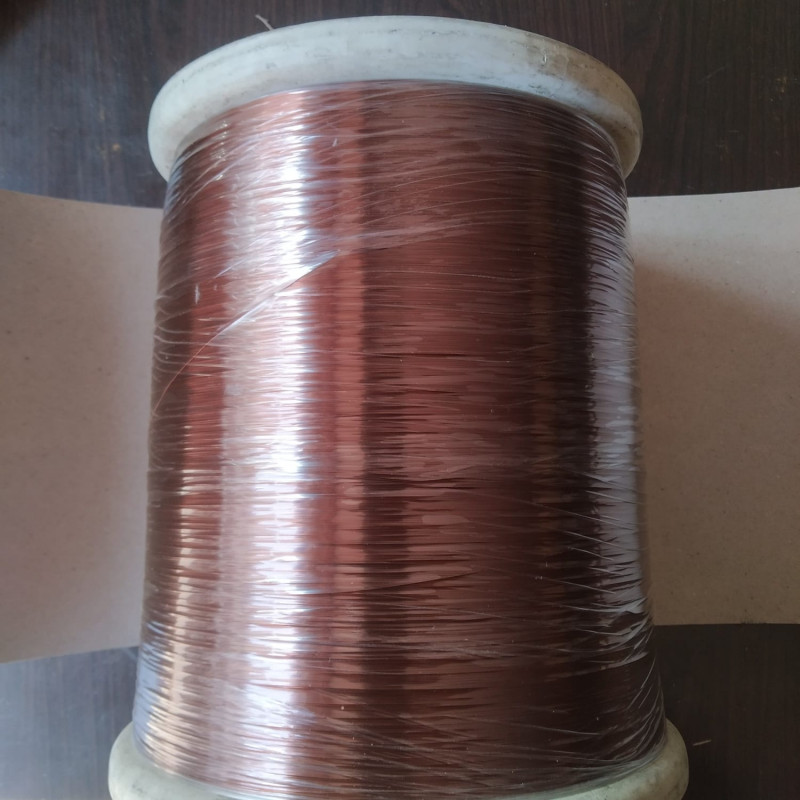
Super-enamelled aluminium wire — Class F vs Class H, the ₹30-50/kg question
What the Thermal Class Actually Means
The thermal class rating tells you the maximum temperature the enamel insulation can withstand continuously without degrading. Class F is rated for 155°C continuous operating temperature. Class H is rated for 180°C.
That 25°C difference might not sound like much. But in insulation life terms, it is enormous. For every 10°C reduction in operating temperature below the rated class, insulation life roughly doubles. Conversely, every 10°C above rated temperature cuts insulation life in half.
So a motor running at 160°C hot-spot temperature with Class F insulation is operating at the very edge of its rating. That same motor with Class H insulation has a 20°C safety margin — and the winding will likely last 4× longer.
When to Pay the ₹30-50/kg Premium for Class H
Variable frequency drive (VFD) motors. VFDs produce voltage spikes and harmonics that increase winding temperature beyond the fundamental current heating. If your motor runs on a VFD, Class H wire gives you critical thermal headroom. I have seen VFD-driven motors with Class F windings fail within 18 months. Class H in the same application runs for 8-10 years.
High-ambient environments. Steel plants, foundries, boiler houses, engine rooms — anywhere the ambient temperature exceeds 50°C. If the motor is in a hot room, the winding starts at a higher baseline temperature. Class H gives you the margin you need.
Overloaded or intermittent-duty motors. Some applications routinely overload the motor for short periods — crushers, conveyors, hoists. The peak winding temperature during overload can spike 30-40°C above steady-state. Class H absorbs those spikes without cooking the enamel.
Rewinding expensive equipment. If you are rewinding a large motor (200 HP+), the labour and downtime cost far exceeds the wire cost difference. Paying ₹30/kg extra for Class H on a 200 kg rewind is ₹6,000. The cost of doing the rewind again if Class F fails: ₹1.5-2 lakh. The premium is trivial insurance.
When Class F Is Perfectly Fine (and Smarter)
Standard industrial motors, well-ventilated. A 50 HP motor running in a clean factory with good airflow rarely sees winding temperatures above 100-120°C. Class F at 155°C rating gives you 35-55°C of headroom. Paying extra for Class H is wasting money.
Short-duty-cycle applications. If the motor runs for 15 minutes, then sits for an hour, the winding never reaches steady-state temperature. Class F is more than adequate. The wire will outlast the motor mechanical components.
Transformer windings for general distribution. Most distribution transformers operate well within Class F limits. Unless the transformer is in a high-ambient location or subjected to frequent harmonic loads, Class F enamelled aluminium is the industry standard for good reason.
Cost-sensitive consumer products. For ceiling fans, washing machine motors, and other consumer appliances, Class F wire is standard. The application does not generate enough heat to justify Class H.
The Real Cost of Getting It Wrong
A textile mill in Gujarat rewound a 300 HP motor with Class F wire to save ₹12,000 on the rewind cost. The motor drove a continuous-process machine — 24/7 operation, 365 days a year. Ambient temperature in the mill: 48°C. The winding failed after 14 months.
Direct cost of rewind: ₹1.8 lakh. Production loss during the 3-day downtime: estimated ₹5.2 lakh. Total cost of choosing Class F: ₹7 lakh.
The Class H premium on the original 350 kg rewind: ₹10,500. The lesson: in continuous-process industries, never spec thermal class by price. Spec it by actual hot-spot temperature plus a margin that accounts for the cost of failure.
Quick Decision Guide
| Scenario | Choose | Rationale |
|---|---|---|
| VFD-driven motor | Class H | Voltage spikes increase winding temperature significantly |
| Standard 50 Hz motor, clean environment | Class F | Adequate headroom, lower cost |
| Foundry / steel plant motor | Class H | High ambient temperature demands higher thermal margin |
| Consumer appliance motor | Class F | Low heat generation, cost-sensitive production |
| Continuous-process industry (24/7) | Class H | Failure cost far exceeds wire premium |
| Distribution transformer | Class F | Standard practice, adequate for normal loading |
| Large motor rewind (200 HP+) | Class H | Premium is trivial vs rewind + downtime cost |
Frequently Asked Questions
Can I mix Class F and Class H wire in the same winding?
Not recommended. The thermal class of the complete winding is limited by the lowest class material used. If you use Class H wire with Class F phase insulation, the entire winding is effectively Class F. Standard practice is to match all insulating materials — wire enamel, phase paper, slot liner, varnish — to the same thermal class.
How can I verify that the wire is Class H and not Class F?
Reputable manufacturers print the thermal class on the spool label and provide a test certificate. In-house verification requires a thermal analysis test (differential scanning calorimetry or thermogravimetric analysis). Visual inspection cannot distinguish between Class F and Class H — the difference is in the enamel formulation, not the appearance.
Does Class H wire have better dielectric strength than Class F?
Not necessarily. Dielectric strength depends on the enamel build (thickness) and coating uniformity, not the thermal class. Both Class F and Class H enamels can achieve the same breakdown voltage per mil at room temperature. The difference is in how the insulation holds up at elevated temperature over time — Class H retains its dielectric properties longer at 180°C than Class F does at 155°C.
Continue Reading
Get a Quote Within 2 Working Days
We supply Class F and Class H enamelled aluminium wire across all standard sizes, with traceability certificates. Bulk and cut-length orders accepted.